On this page
- What a Birth Plan Is (and Isn't)
- It's a Communication Tool
- It's About Preferences, Not Demands
- It's a Living Document
- It's Not a Substitute for Conversation
- Key Elements to Include in Your Birth Plan
- Your Support Team
- Labor Preferences
- Delivery Preferences
- Postpartum and Newborn Care
- Crafting Your Birth Plan: A Practical Approach
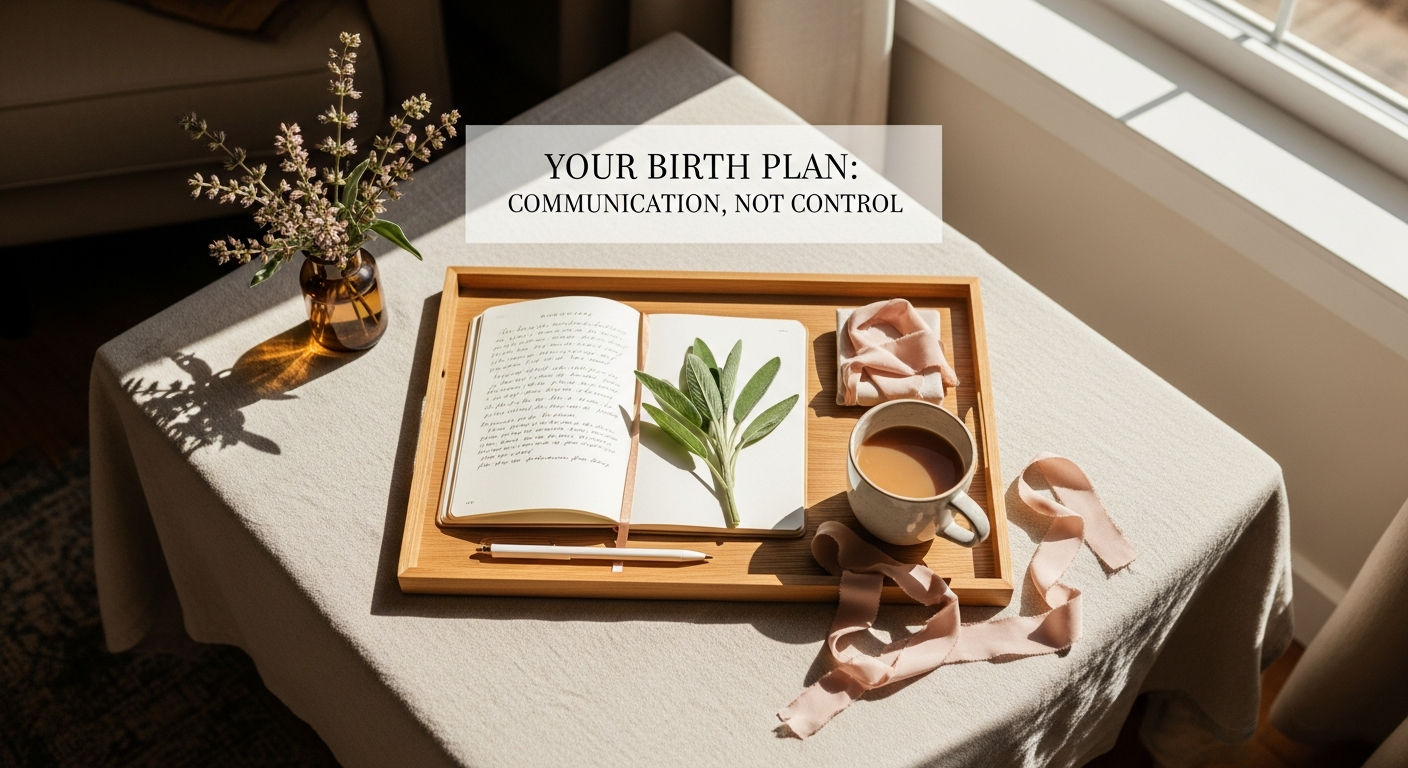
Your Birth Plan: Communication, Not Control
When you start thinking about your birth, the idea of a "birth plan" often comes up. It's easy to imagine it as a detailed script for how everything must unfold, but that's not quite what it is. Instead, think of your birth plan as a one-page summary of your preferences and your non-negotiables, designed to communicate effectively with the care team who will be supporting you. The point is clear communication, not rigid control.
Pregnancy and birth are dynamic experiences, and while we can prepare, we can't always predict every turn. A well-crafted birth plan helps ensure that even when things shift, your core values and wishes are understood. It's a tool for advocacy and clarity, not a guarantee of a specific outcome.
What a Birth Plan Is (and Isn't)
Let's clarify what a birth plan truly represents:
It's a Communication Tool
Imagine meeting a new team of people who will be with you during one of the most significant events of your life. They don't know your history, your hopes, or your fears. Your birth plan offers them a concise overview of what matters most to you. It's a way to introduce yourself and your preferences quickly and clearly, especially during a time when you might be focused on labor itself.
It's About Preferences, Not Demands
Your birth plan outlines your preferences. This distinction is important. It's not a list of demands, but rather a guide for your care providers to understand your ideal scenario. It acknowledges that birth can be unpredictable and that flexibility is often necessary. Framing it this way allows for collaboration and shared decision-making, rather than setting up a potential conflict if things don't go exactly as written.
It's a Living Document
While you'll write it down, your birth plan isn't set in stone. You might revisit it as you learn more, or as your feelings about certain aspects of birth evolve. It's a reflection of your current understanding and desires, and it can adapt as you do. Discussing it with your partner and your care provider during your prenatal appointments is a great way to refine it.
It's Not a Substitute for Conversation
A birth plan is a starting point for conversations, not an end to them. It's best used in conjunction with ongoing discussions with your OB or midwife. They can help you understand hospital policies, medical considerations, and what's realistic for your specific situation. This collaborative approach ensures that your plan is both informed and practical.